
Why a Certified Home Inspector Beats a Construction Company Every Time
A construction company can build a house and still miss what is wrong with one.
That sounds strange until you think about what a home inspection actually is. A builder is trained to construct, repair, remodel, and manage trades. A certified home inspector is trained to evaluate visible systems, recognize defects, describe risk, and document conditions without trying to sell the repair.
Those are not the same job.
Across the country, home inspectors regularly find problems left behind by contractors, builders, remodelers, roofers, electricians, plumbers, and handymen. Some are small, like missing caulk at an exterior penetration. Others are expensive or dangerous, like improper deck connections, unsafe electrical work, roof flashing defects, plumbing leaks, or attic ventilation mistakes.
That does not mean every construction company does poor work. Many do excellent work. But hiring a construction company to perform your home inspection is the wrong tool for the job. A home inspection needs independence, specific training, broad system knowledge, and a reporting standard that puts the condition of the home first.

Building a house and inspecting a house require different skills
A construction company usually works from a production mindset. The goal is to complete a project, coordinate labor, solve site problems, and deliver a finished result. That work can be demanding and valuable.
A home inspector works from an evaluation mindset. The goal is to observe, test accessible components, identify defects, explain safety concerns, and help the client understand the home’s condition at one point in time.
Those two mindsets overlap in a few places, but they are not interchangeable.
A general builder may know how to frame a wall, install trim, or manage a kitchen remodel. But a full home inspection goes far beyond whether something looks newly built or generally functional. It includes the visible and accessible parts of major systems, including:
Roof covering, flashing, penetrations, and drainage
Exterior siding, grading, decks, porches, steps, and drainage
Foundation, crawl space, basement, framing, and structural indicators
Electrical service, panels, grounding, outlets, visible wiring, and safety devices
Plumbing supply, drainage, water heaters, fixtures, and visible leaks
Heating and cooling equipment
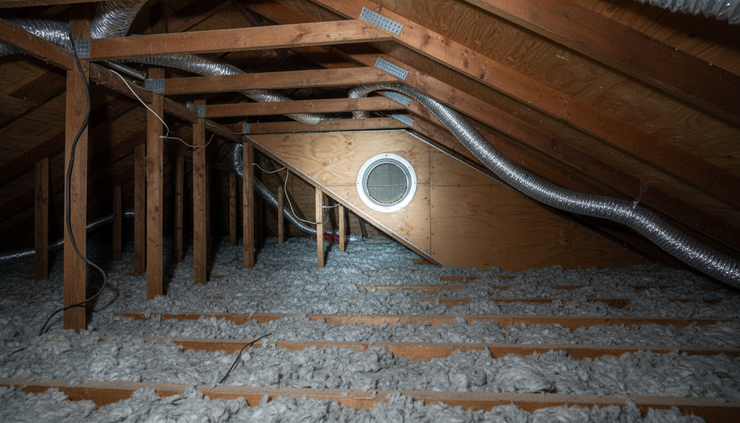
Attic ventilation, insulation, and signs of moisture movement
Interior walls, ceilings, floors, windows, doors, and stairs
Fire safety concerns and other visible hazards
A certified home inspector is trained to look at the home as a connected system. A small issue in one area may point to a larger concern somewhere else. For example, staining on a ceiling may connect to poor roof flashing, a plumbing leak, attic condensation, or an old repair that was never documented. The job is not to guess. The job is to follow the evidence.
A construction company may be very good at one trade or type of project. That does not mean it has the breadth required to inspect every visible system in a home.
A certified inspector follows a standard of practice
One of the biggest differences between a certified home inspector and a random construction company is accountability to an inspection standard.
In many states, home inspectors must be licensed. Certification requirements vary by state and organization, but professional inspectors often follow a formal standard of practice. These standards define what the inspector is expected to inspect, what the inspector is not expected to inspect, and how findings should be communicated.
That matters because a home inspection is not a casual walkthrough.
A proper inspection should result in a written report that documents visible defects, safety concerns, system conditions, and recommended next steps. It should distinguish between minor maintenance, repair needs, safety issues, and items that may require further evaluation by a qualified specialist.
A construction company that “takes a look” may not follow any inspection standard at all. It may not provide a detailed report. It may not inspect components outside its usual trade knowledge. It may focus on obvious repair opportunities instead of the whole property.
A certified inspector’s report also creates a clearer record. This is especially useful during a real estate transaction, where buyers, sellers, agents, and sometimes attorneys need to understand what was observed.
A handshake opinion from a builder is not the same as a documented home inspection.
Independence matters when money is on the line
A home inspection should be objective. The inspector should not be trying to turn the inspection into a remodeling project.
That is one reason hiring a construction company can create a conflict of interest. If the same company inspects the home and offers to repair everything it finds, the lines can get blurry. The company may be tempted to overstate repair needs, understate issues outside its comfort zone, or focus on work it wants to sell.
Even when nobody has bad intentions, the structure is not ideal.
A certified home inspector’s role is different. The inspector evaluates and reports. In most cases, the inspector does not perform the repairs. That separation protects the client because the findings are not tied to a sales pitch for construction work.
This independence is especially important for buyers. A buyer needs clear information before making one of the largest purchases of their life. The inspection should help them understand the property, not pressure them into hiring the person who found the problem.
This is one of the main reasons why a certified home inspector beats a construction company every time. The value is not just knowledge. It is also neutrality.

Inspectors are trained to recognize patterns across all ages of homes
A house built in 1900 is not inspected the same way as a house built this year.
Older homes may include materials, layouts, and installation methods that are no longer common. They may also have decades of repairs layered on top of each other. A 1900-era home might have old framing methods, stone or brick foundation elements, knob-and-tube wiring remnants, cast iron drains, galvanized water lines, plaster walls, limited insulation, unusual roof framing, or additions from several different time periods.
Modern homes bring their own concerns. Newer construction can have improper flashing, poor grading, missing insulation, rushed installation, roof defects, HVAC sizing issues, incorrect drainage, loose fixtures, and incomplete finish work. New does not automatically mean correct.
A good inspector understands both ends of the timeline.
The difficulty is that homes are not frozen in the year they were built. A home from 1900 may have a 1970s electrical panel, a 1990s addition, a 2010 roof, and a water heater installed last month. Each layer may have been completed by a different person using different standards, different materials, and different levels of skill.
That is where inspection training pays off. Inspectors learn to read the house like a history of repairs and changes. They look for signs that work was performed improperly or incompletely. They notice when a newer system does not fit well with an older structure. They know when to recommend further evaluation by a plumber, electrician, structural engineer, roofer, or HVAC contractor.
A construction company may understand the work it performs every day. But inspecting a century of building practices, repairs, and system changes requires a different kind of experience.
Construction companies often see parts, not the whole system
Many builders and contractors specialize, even when they call themselves general construction companies. One company may focus on remodels. Another may build decks. Another may handle roofing, siding, or additions. Some are strong in framing but weaker in mechanical systems. Others are excellent finish carpenters but not electrical experts.
A home inspection requires a broader view.
For example, a contractor may see a roof stain and think, “That section needs repair.” A trained inspector may trace the issue more carefully. The stain could relate to:
A roof covering defect
Missing kickout flashing
Improperly sealed vent flashing
Attic condensation
Bath fan exhaust venting into the attic
Ice dam history in colder regions
A plumbing vent leak
An old problem no longer active
The same applies to foundation cracks. Not every crack means structural failure. Not every crack is harmless either. An inspector looks at location, pattern, displacement, water entry, grading, drainage, framing movement, and related interior signs.
Homes work as systems. Water management affects foundations. Attic ventilation affects roof life and moisture levels. Electrical defects affect fire risk. Poor grading can lead to basement moisture. Missing deck flashing can rot the framing behind a beautiful exterior.
A construction company may be able to repair one of those issues. A home inspector is trained to notice how those issues connect.
The most expensive defects are not always obvious
Fresh paint, new flooring, and updated cabinets can make a house feel well maintained. They can also distract from serious problems.
Home inspectors are trained to look past cosmetics. A pretty house can still have unsafe wiring, failed window seals, hidden water damage, poor roof drainage, missing handrails, unsafe deck connections, or a water heater installed incorrectly.
A construction company may notice some of these. A certified inspector is expected to look for them as part of a consistent process.
Common issues inspectors find after construction or remodeling work include:
Missing or improper roof flashing
Exterior doors installed without proper drainage details
Decks attached without proper fasteners or flashing
Electrical panels with unsafe wiring conditions
GFCI protection missing where expected
Plumbing traps or drain lines installed incorrectly
Bath fans venting into attics instead of outdoors
Insulation gaps or blocked attic ventilation
Poor grading that directs water toward the foundation
Water heaters lacking proper safety features or clearances
Stairs, guardrails, or handrails that create fall hazards
These problems do not always announce themselves during a quick walkthrough. Some require testing. Some require entering the attic or crawl space. Some require knowing what should have been done, what is visible now, and what may happen later if the condition is ignored.
A home inspection is not about admiring the finished work. It is about checking whether the visible parts of the home are safe, functional, and properly maintained.
New construction still needs an independent inspection
One of the riskiest assumptions in real estate is that a newly built home does not need an inspection.
New homes can have defects too. Crews work fast. Subcontractors rotate in and out. Supervisors manage multiple tasks. Weather, scheduling pressure, material substitutions, and human error can affect the final result.
A municipal code inspection is not the same as a private home inspection. Code officials serve an important role, but their inspections are usually limited in scope and time. They may check certain code requirements at specific stages of construction. They are not hired to represent the buyer and explain every visible concern in the finished home.
A new construction inspection can identify incomplete work, damaged components, safety concerns, installation defects, moisture problems, and items to address before closing or before a builder warranty period ends.
New construction issues can include simple punch-list items, but they can also include larger concerns such as drainage problems, roof flashing mistakes, attic insulation gaps, HVAC duct issues, or electrical defects.
The point is not to attack builders. The point is that construction is complex. Mistakes happen. Independent inspection helps catch them before they become bigger problems.
A construction background can help, but it is not enough by itself
Some excellent home inspectors have construction backgrounds. That experience can be useful. A former carpenter, electrician, plumber, roofer, or builder may bring valuable field knowledge to inspection work.
But experience in construction does not automatically make someone a competent home inspector.
Inspection requires its own discipline. The inspector must know what to look at, what to report, how to communicate clearly, and when to recommend a specialist. The inspector must also understand the limits of the inspection. A standard home inspection is visual and non-invasive. The inspector does not open walls, dismantle equipment, or guarantee future performance.
A contractor may be used to solving problems by opening things up, replacing parts, or making repairs. An inspector must evaluate what is visible and accessible, then explain the significance of the finding without overstating what cannot be confirmed.
That communication skill matters. A good report should help a client understand:
What the issue is
Why it matters
Whether it appears to be a safety concern, repair item, or maintenance need
What kind of professional should evaluate or repair it
Which items deserve attention soon
Construction experience can be part of an inspector’s skill set. It should not be the only qualification.
Repair knowledge and inspection judgment are not the same thing
A contractor may know how to fix a defect. That does not always mean they know how to inspect for it.
Repair work is often focused on the task at hand. If a company is hired to remodel a bathroom, it may pay close attention to tile, plumbing fixtures, ventilation, and finishes in that room. It may not inspect the roof, electrical panel, attic, siding, crawl space, grading, water heater, fireplace, and every other accessible system.
A home inspection requires a consistent process from top to bottom. The inspector cannot simply follow whatever looks interesting. The inspector must cover the property in an organized way so major components do not get missed.
That process is one reason experienced inspectors can find defects that others walk past. They know where common failures occur. They know which areas deserve extra attention. They know how one clue can lead to another.
For example, a sloped floor in an older home may not mean panic. But it deserves context. Is there visible settlement? Are there modified joists? Is there moisture in the crawl space? Are support posts temporary, undersized, or poorly installed? Are doors sticking in the same area? Has the home been altered?
A construction company might jump straight to a repair recommendation. A good inspector documents the condition, explains possible significance, and recommends the proper next step when needed.
Licensing and certification help protect the client
Rules differ across the United States. Some states require home inspectors to be licensed. Some have specific education, exam, insurance, or continuing education requirements. Other states regulate the profession less heavily.
Even where licensing is not required, certification from a recognized inspection organization can show that the inspector has at least committed to training, standards, and continuing education.
Clients should look for an inspector who can explain their qualifications clearly. The basics often include:
State license, where required
Professional certification or membership
Experience with the type and age of the property
Sample reports available for review
Errors and omissions insurance, where applicable
Clear inspection agreement and scope
Willingness to explain findings in plain language
These are not just formalities. They help separate a professional inspection service from a person who simply “knows houses.”
A construction company may carry a contractor license, but that license usually relates to construction work, not home inspection. The ability to pull a permit or manage a remodel does not prove competence in inspecting and reporting on an entire house.
The report is part of the product
A proper home inspection does not end when the inspector leaves the property. The report is a major part of the service.
A useful report should be clear, organized, and specific. It should include photos where helpful. It should avoid vague statements like “needs work” without explaining what was observed. It should help the client understand which issues are major and which are routine.
A weak report can leave people confused. A strong report provides a practical roadmap.
That does not mean every defect is a crisis. Good inspectors avoid fear-based language. They explain defects in proportion. A missing outlet cover and an overheated electrical conductor do not deserve the same level of concern.
This is another place where construction companies often fall short as inspectors. A contractor estimate is designed to price repairs. A home inspection report is designed to describe conditions. Those are different documents with different purposes.
If you hire a construction company for an inspection and receive only a verbal opinion or repair quote, you may miss the documentation needed to make informed decisions.

The cheapest inspection can become expensive later
It is tempting to ask a contractor friend or construction company to look over a house to save money. That shortcut can cost far more than a professional inspection.
If a serious issue gets missed, the buyer may inherit major repair costs. If a safety concern is overlooked, the consequences can be worse than financial. If an old home is misunderstood, a buyer may either panic over normal aging or ignore real signs of trouble.
A certified inspector helps reduce those risks by providing a broader, more structured review.
That does not mean an inspector can find every hidden defect. No honest inspector should claim that. Walls, floors, ceilings, stored belongings, weather conditions, locked areas, and system limitations can all restrict what is visible. A home inspection is not a warranty and not a code compliance inspection.
Even with those limits, a professional inspection is one of the best tools available for understanding a home before making decisions.
When a construction company does belong in the process
There is still a place for construction companies and trade contractors.
After the inspection, you may need repair estimates. A contractor can evaluate specific defects, propose repair methods, and provide pricing. A roofer may need to review a roof defect. An electrician may need to correct unsafe wiring. A structural engineer may need to evaluate movement or framing concerns. A plumber may need to repair drainage or water supply issues.
That sequence makes sense:
Hire a certified home inspector to evaluate the whole property.
Review the inspection report.
Bring in qualified contractors or specialists for specific concerns.
Use repair estimates and expert evaluations to make decisions.
That approach gives each professional the right role. The inspector identifies and explains. The contractor repairs and prices the work.
Problems start when one person is expected to do both jobs without the right training, standards, or independence.
How to choose the right home inspector
Choosing a home inspector should involve more than picking the first name on a list. The right inspector should be qualified, thorough, and clear.
Before hiring, ask direct questions:
Are you licensed in this state, if licensing is required?
What certifications or professional training do you have?
How long does a typical inspection take for this type of home?
Do you inspect roofs, attics, crawl spaces, electrical panels, plumbing, HVAC, and exterior systems?
Can I see a sample report?
Do you carry insurance?
Do you have experience with older homes, new construction, or the type of property being purchased?
Do you explain findings after the inspection?
The sample report is especially useful. It shows how the inspector communicates. Look for clear photos, plain language, organized categories, and specific recommendations. Avoid reports that are too vague, too thin, or filled with confusing boilerplate.
Price should not be the only deciding factor. A cheap inspection that misses major defects is no bargain. A careful inspection can give a buyer clearer choices, better negotiation information, and a stronger understanding of maintenance needs after moving in.
A good inspection respects the home and the decision
Every home has defects. Older homes have history. Newer homes have workmanship issues. Renovated homes may hide a mix of both.
The purpose of a home inspection is not to scare anyone away from a property. It is to bring clarity. A home may still be a good purchase with defects, as long as the buyer understands what needs repair, what may become expensive, and what safety items should be addressed.
Construction companies play an important role in building and repairing homes. But a home inspection should be performed by someone trained to inspect, document, and explain the condition of the whole property.
A builder may know construction. A certified home inspector knows inspection.
When the condition of a home is on the line, choose the professional whose job is to see the whole picture.

Comments